You can feel when a Shopify store is busy but not healthy. Sessions are coming in, a few products get attention, maybe your ads are driving clicks, yet sales don't follow. The usual response is to chase more traffic, add more emails, or post more content. That often adds noise, not clarity.
A practical sales funnel fixes that by turning the path from visit to purchase into something you can inspect stage by stage. Modern funnel reporting is built around volumes, conversion rates, drop-offs, and timing across each step, not just the final sale, with conversion commonly measured as (number in later stage ÷ number in earlier stage) × 100 according to VWO's guide to sales funnel reporting. For a Shopify store, that matters because most leaks usually happen before checkout. They happen when a visitor can't find the right product, gets asked for too much too soon, or receives the wrong follow-up after showing interest.
The stores that build stronger funnels usually do one thing better than everyone else. They treat quizzes, forms, product recommenders, and sign-up flows as the qualification engine of the funnel, not as an afterthought. If you're selling perfume, apparel, supplements, pet products, or any catalog where choice creates friction, that interactive layer does the heavy lifting.
Table of Contents
- Why Your Shopify Store Needs a Sales Funnel
- Mapping Your Shopify Customer Journey
- Building the Interactive Capture Layer
- Activating Leads with Nurture and Segmentation
- Tracking Funnel Performance and KPIs
- Optimizing Your Funnel for Higher Conversions
Why Your Shopify Store Needs a Sales Funnel
Most Shopify owners don't need another abstract framework. They need a way to explain why product views look decent while revenue feels stubborn.
That's where building sales funnels becomes useful. Not as a slide-deck concept, but as an operating model for your store. A funnel gives you a sequence: first touch, product interest, qualification, purchase, repeat purchase. Once that sequence is visible, you can stop guessing.
A lot of stores still behave as if every visitor should land on a collection page, browse, add to cart, and buy. That works for replenishment products and simple catalogs. It breaks down fast when the buyer needs guidance. Perfume shoppers want help narrowing scent families. Skincare shoppers want matching products. Dog food buyers want size, age, and dietary fit handled for them.
Practical rule: If customers need help choosing, your funnel should qualify before it sells.
That's why the funnel matters. It creates a path that guides the right visitor toward the right product and filters out weak intent before you waste discounting, retargeting, or email sends on it.
A useful Shopify funnel usually includes:
- A clear entry point that matches visitor intent from ads, social, search, or email
- An interactive qualification step that captures useful data, not just an email address
- A personalized handoff into product recommendations, email flows, SMS, or a direct offer
- A retention step so the sale isn't the end of the system
For many stores, the missing piece is the interaction layer between click and cart. That's why e-commerce teams often build guided sign-ups, product recommenders, and quizzes into the journey instead of relying only on static landing pages. If you want examples of that setup, VeeForm's e-commerce form builder shows the kinds of interactive flows Shopify brands use for sign-ups, surveys, and product recommendation experiences.
Mapping Your Shopify Customer Journey
A profitable funnel starts with buyer behavior, not your org chart. “Top of funnel” and “bottom of funnel” are fine shorthand, but they're too vague when you're trying to decide what someone should see, answer, or receive next.
Start with buyer behavior, not channel labels
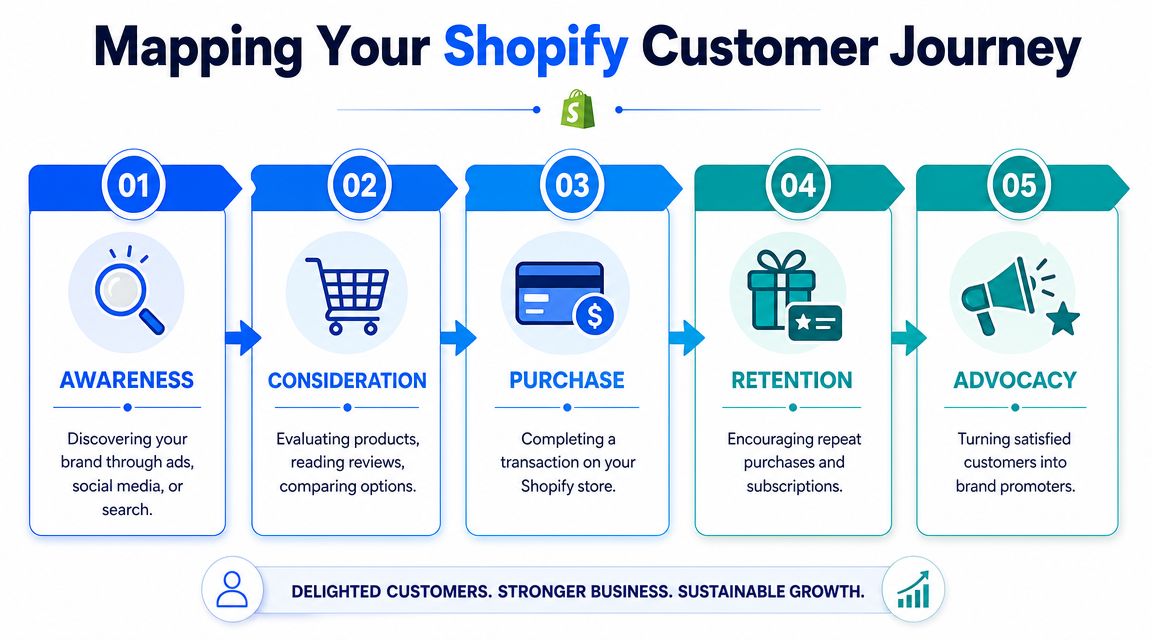
Industry guidance has moved from broad four-stage models toward more detailed six-stage funnels because they give teams better execution detail. One practitioner source notes that “a six-step sales funnel tends to work best” and commonly frames those stages as awareness, interest, evaluation, engagement, action, and retention in line with modern CRM and analytics usage, as covered in this Marketing Data Science article on building and measuring a sales funnel.
That's a better fit for Shopify because shoppers rarely move in a straight line. They might click an ad, browse three products, leave, return from email, take a quiz, and only then buy.
A practical map for Shopify stores
Here's how I'd map the journey for a store selling perfume.
At awareness, the shopper isn't looking for your SKU. They're trying to solve a taste problem. Maybe they know they like clean scents but hate anything powdery. A broad product grid isn't helpful yet.
At interest, they're willing to interact. At this point, a quiz, scent finder, size guide, or “help me choose” form earns its place. You're not just asking for contact details. You're collecting preference data.
At evaluation, the buyer compares. They read notes, scan reviews, check return policy, and look for confidence signals. Personalized recommendations prove more effective than generic category pages.
At engagement, they take a meaningful next step. They save results, start checkout, request a bundle recommendation, or join your list to get their matched products.
At action, they purchase.
At retention, you use what they told you earlier to make the next touch more relevant. If their first answer told you they prefer woody scents, your post-purchase flow shouldn't push sweet florals.
A good customer journey map doesn't just show what the shopper sees. It shows what the store learns at each step.
A dog food brand would map this differently. Breed size, age, allergies, subscription preference, and feeding goals matter more than aesthetics. The structure is the same. The decision inputs change.
Shopify Funnel Stages and Tactics
| Stage | Primary Goal | Example Shopify Tactic |
|---|---|---|
| Awareness | Get qualified visitors to engage | Landing page tied to a specific ad angle or search intent |
| Interest | Capture preference data | Product finder quiz or guided form |
| Evaluation | Reduce uncertainty | Recommended products with reviews, FAQs, and benefit-based copy |
| Engagement | Create a committed next step | Email capture tied to personalized results or bundle builder |
| Action | Convert intent into purchase | Pre-filled cart, tailored offer, simplified checkout |
| Retention | Turn first purchase into repeat behavior | Reorder reminder, cross-sell flow, loyalty or subscription prompt |
Building the Interactive Capture Layer
This is the part most stores underbuild. They spend heavily on traffic and then ask visitors to either buy immediately or “join our newsletter.” That's a weak handoff.
The interactive capture layer should sit between attention and offer. For many Shopify stores, that means a quiz, recommender, guided sign-up, or conditional form.
Use one interactive asset as the front door
Start with one use case. Don't build five flows at once.
If you sell fragrance, build a “Find Your Perfect Scent” quiz. If you sell pet nutrition, build a feeding plan recommender. If you sell apparel, build a style or fit finder. The format changes, but the job is the same: qualify intent and route people to the most relevant next step.
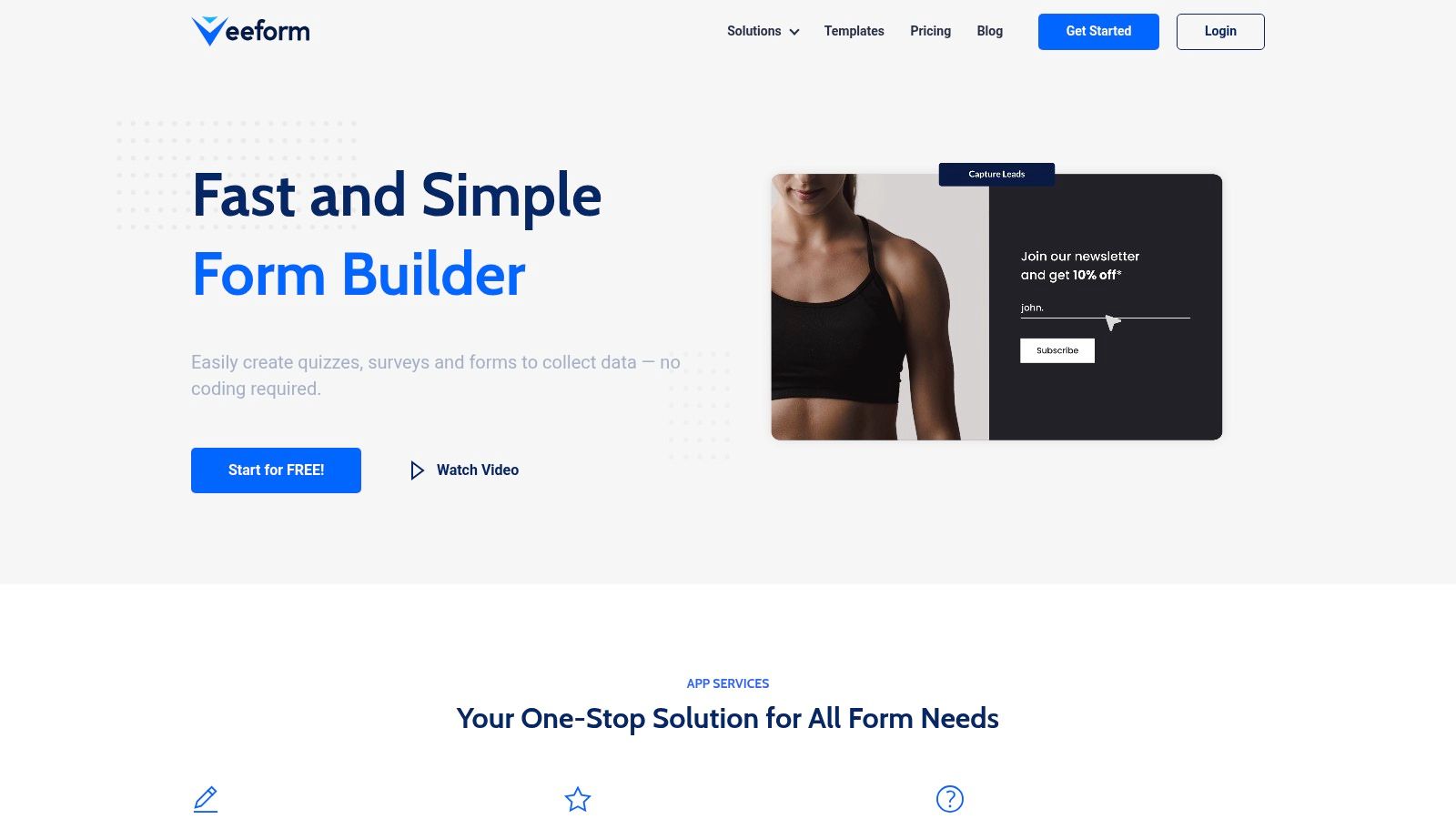
A no-code tool like VeeForm can handle this kind of setup with one-question-at-a-time flows, conditional logic, answer recall, multiple ending types, and Shopify-friendly embeds. If you want a starting point, its lead capture form template is the kind of structure teams adapt into product recommendation and qualification flows.
The mistake I see most often is trying to gather every possible detail upfront. That creates friction, and friction kills completions. Expert guidance on funnel design warns against too many form fields and recommends aligning form length and scoring thresholds to reduce abandonment because performance is often lost at handoff points, as explained in this Cognism article on sales funnels.
What to ask and what to avoid
A useful capture flow asks only questions that change the recommendation, segment, or follow-up.
For a perfume quiz, good questions include:
- Scent preference such as floral, woody, fresh, or spicy
- Usage context like everyday wear, evening, gifting, or travel
- Intensity preference for lighter or more statement-making scents
- Known dislikes so you can exclude what turns buyers off
Weak questions are the ones that feel interesting internally but don't improve qualification. If the answer won't change product matching, messaging, or offer logic, cut it.
A simple build process looks like this:
Pick a single conversion goal
Decide whether the flow should drive direct product recommendations, list growth, bundle matching, or consultation requests.Write the final outcomes first
Define the result screens before the questions. If you can't name the recommendation paths, the quiz isn't ready.Group answers into buying signals
Preference, urgency, budget sensitivity, and product fit each tell you something different.Add conditional logic
Someone buying a gift should see different follow-up than someone shopping for themselves.Delay email capture until value is clear
Ask for contact details after the shopper sees progress or expects personalized results.
The best quiz question is the one that improves the next message, not the one that fills your spreadsheet.
This is also where your acquisition work should line up with the capture experience. If your ads promise “find your ideal scent,” the landing page should continue that promise, not dump visitors onto a collection page. Teams running paid social should also tighten the handoff between creative angle and quiz path. If you need a cleaner paid traffic setup upstream, this resource on how to streamline your Meta ad workflow is useful for aligning campaign inputs with landing page intent.
Where to place the capture experience
Placement changes performance more than most design tweaks.
Use the capture layer in a few places:
- Dedicated landing pages for paid traffic with one clear CTA
- Homepage entry points for visitors who aren't ready to browse the full catalog
- Collection-page prompts when shoppers seem stuck between options
- Exit-intent or timed popups only when the offer is relevant, not generic
A short demo helps if you're building this for the first time:
The key trade-off is simple. The more information you ask for, the stronger your segmentation can become. But every extra question has to earn its place. For most stores, shorter and smarter beats longer and “more complete.”
Activating Leads with Nurture and Segmentation
A lead captured without segmentation is only slightly better than anonymous traffic.
I've seen this happen repeatedly. A shopper takes a scent quiz, tells the brand they prefer fresh notes, wants something for daily wear, and dislikes sweet perfumes. Then they get a generic welcome flow featuring bestselling gourmands and a sitewide discount. The brand collected useful intent and then ignored it.
Generic follow-up wastes good intent
The difference between a weak nurture flow and a useful one isn't email frequency. It's whether the follow-up reflects what the shopper already told you.
A well-structured funnel should be built from explicit stages, with stage-to-stage conversion diagnostics and cohort-based segmentation before nurture sequences are designed, according to this Monday.com guide to creating a sales funnel. In practice, that means you don't just send “welcome emails.” You send the right sequence to the right answer group.
Here's the contrast.
Before: every new lead gets the same three-email sequence, the same featured products, and the same broad offer.
After: quiz answers trigger different branches. Floral preferences get one product set. Woody preferences get another. Gift buyers receive reassurance about discovery, presentation, and easy selection. Self-purchasers get more use-case content and comparison help.
Segmentation works best when it starts with declared preferences, then gets refined by behavior.
Build segments from quiz answers
For Shopify brands, the most practical setup is to pass quiz or form responses into your email platform and SMS stack, then tag contacts based on preference, use case, and readiness.
A straightforward segmentation model might include:
- Preference segment based on style, flavor, scent family, skin concern, or pet profile
- Intent segment based on gift shopping, self-purchase, first-time buyer, or replenishment
- Readiness segment based on whether they viewed products, added to cart, or only completed the quiz
Once those segments exist, nurture gets easier to write. The email doesn't need to say everything. It needs to answer the next obvious question.
For stores adding text messaging into the mix, SMS usually works better when it plays a supporting role, such as reminders, replenishment prompts, or personalized nudges tied to known intent. If you're shaping that channel, this guide to SMS for ecommerce growth is a useful reference for timing and message strategy. And if your capture flow starts with a simpler opt-in rather than a full recommender, a newsletter signup form template is a clean way to structure that first step.
One practical note. Don't confuse “more personalization” with “more copy.” A segmented sequence often gets shorter because it doesn't need to explain products the shopper was never likely to buy.
Tracking Funnel Performance and KPIs
A funnel can look busy and still be unprofitable.
I see this a lot with Shopify brands that add a quiz, collect a good volume of emails, and assume the funnel is working. Then you trace the path from first click to first order and uncover the core issue. Plenty of visitors started the interactive flow, but too few finished it, too few accepted the recommendation, or too few bought the product they were matched with.
The interactive capture layer solves a measurement problem as much as a conversion problem. It gives you clean checkpoints. A standard content funnel often leaves too much room for guesswork. A quiz, form, or recommender creates clear stage transitions you can track in Shopify, GA4, Klaviyo, and whatever tool you use to build the flow, including VeeForm.
A useful starting point is agreeing on stage definitions across the team. Crazy Egg's article on sales funnels makes the same point from a broader funnel perspective. For an ecommerce store, I'd keep the definitions operational:
A visitor lands on the page. An engaged visitor starts the quiz, form, or product finder. A captured lead submits contact details. A qualified lead completes the interactive flow and fits a real product path, use case, or buying profile. A buyer places an order. A repeat buyer returns through retention, replenishment, or a new product need.
Write those definitions down once. Then enforce them everywhere.
If GA4 counts engagement at quiz start, Klaviyo counts a lead only after email submit, and Shopify reports conversions without tying them back to the recommendation step, your team will waste time arguing over dashboards instead of fixing drop-off.
A helpful KPI stack
You do not need twenty metrics. You need the few that expose friction, qualification quality, and purchase intent at each handoff.
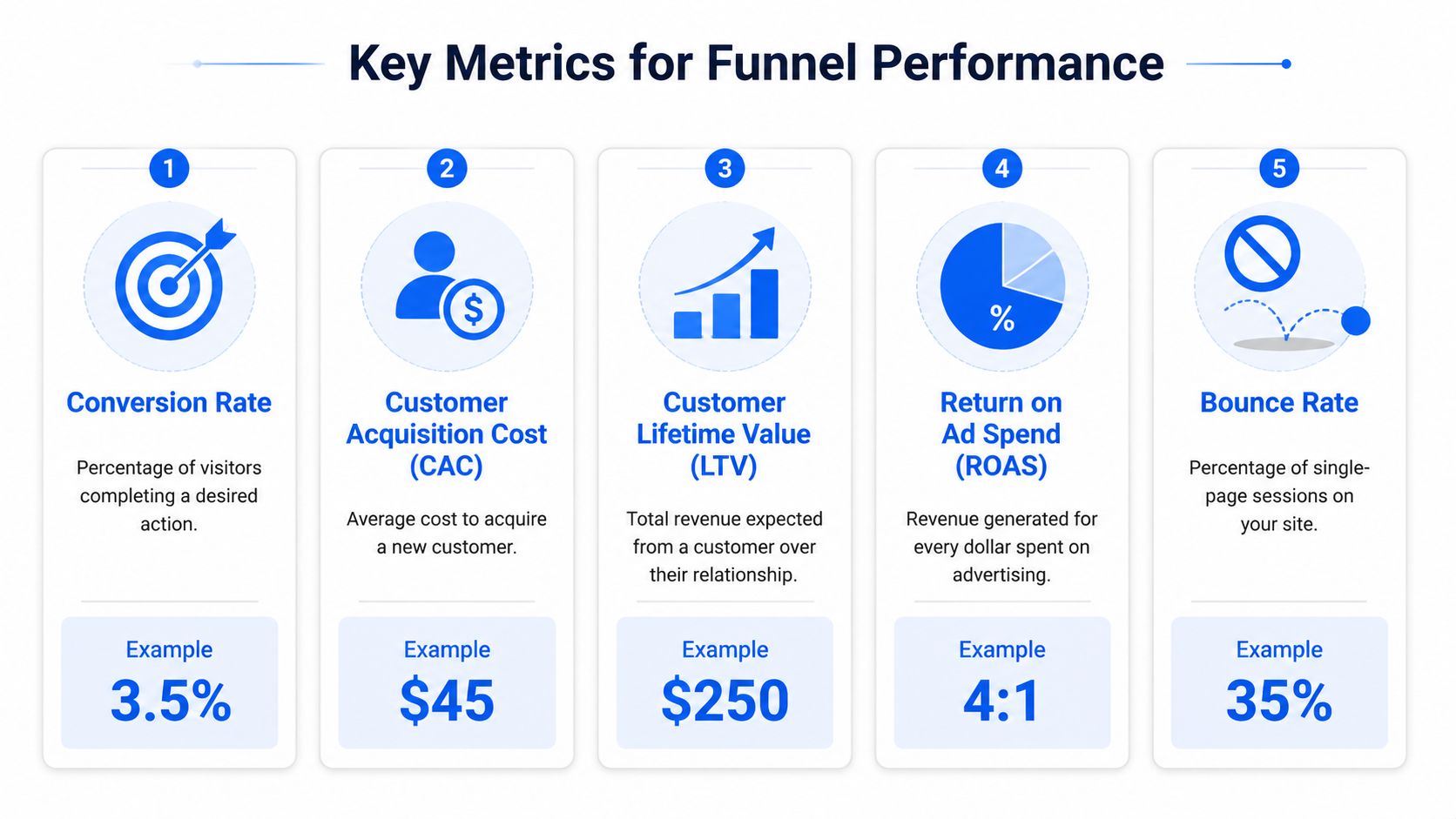
Track these first:
Landing page click-through rate
Measures whether the promise gets the right visitor into the funnel.Quiz or form start rate
Shows whether the interactive entry point is clear and appealing.Completion rate
Reveals friction inside the experience. If starts are strong and completions are weak, the flow is too long, too vague, or asking for too much too early.Lead capture rate
Measures how many completers give you contact details.Qualification rate
Measures how many captured leads fit a useful segment, product path, or customer profile. This matters more than raw lead volume.Recommendation click-through rate
Shows whether the result page feels credible and specific enough to move shoppers toward product pages or cart.Recommendation-to-purchase conversion
Tells you whether the match logic and handoff are producing revenue, not just engagement.
Calculate every stage as a sequential conversion: later-stage count divided by earlier-stage count, multiplied by 100. That keeps diagnosis clean. Blended conversion rates hide where the funnel is leaking.
Here's the practical read on common patterns:
| Funnel checkpoint | What it usually means |
|---|---|
| Strong click-through, weak quiz starts | The ad or page promise gets attention, but the interactive entry point is buried or poorly framed |
| Strong quiz starts, weak completion | The flow has too much friction, weak question logic, or low perceived value |
| Strong completion, weak lead capture | The email or SMS ask comes at the wrong moment, or the benefit is not clear enough |
| Strong lead capture, weak recommendation click-through | Results feel generic, low-confidence, or too broad |
| Strong recommendation clicks, weak purchase | Product page, offer, price, or cart handoff is breaking momentum |
| Strong first purchase, weak repeat rate | The original recommendation solved a one-time need, but retention messaging does not reflect future buying intent |
One more metric deserves attention: revenue per captured lead. For many Shopify stores, this is more useful than top-line lead count because it shows whether the capture layer is producing buyers worth following up with. A shorter quiz that captures fewer but better-fit shoppers will often beat a high-volume lead form.
If you want a CRO lens on how these metrics connect to purchase behavior, UFO Performance Marketing on conversions is a solid reference.
Keep the scoreboard simple. If the team cannot answer three questions, the setup is still too messy: Where are shoppers dropping? Which segments buy best? Which interactive path produces the highest-value customer?
Optimizing Your Funnel for Higher Conversions
Building sales funnels on Shopify isn't a one-time setup. It's an ongoing cycle of reducing friction, improving qualification, and deciding what kind of conversion you want more of.
That last part matters. Some funnels increase intent but don't speed up purchase. That doesn't automatically mean the funnel is failing. A more nuanced view is emerging around trust-building content, richer behavioral segmentation, and using data to choose whether to optimize for faster conversion, better-qualified conversion, or higher lifetime value, as discussed in this Mountain article on funnel building.
Test friction first
Most stores test the wrong things first. They rewrite headlines and button colors while leaving bigger problems untouched.
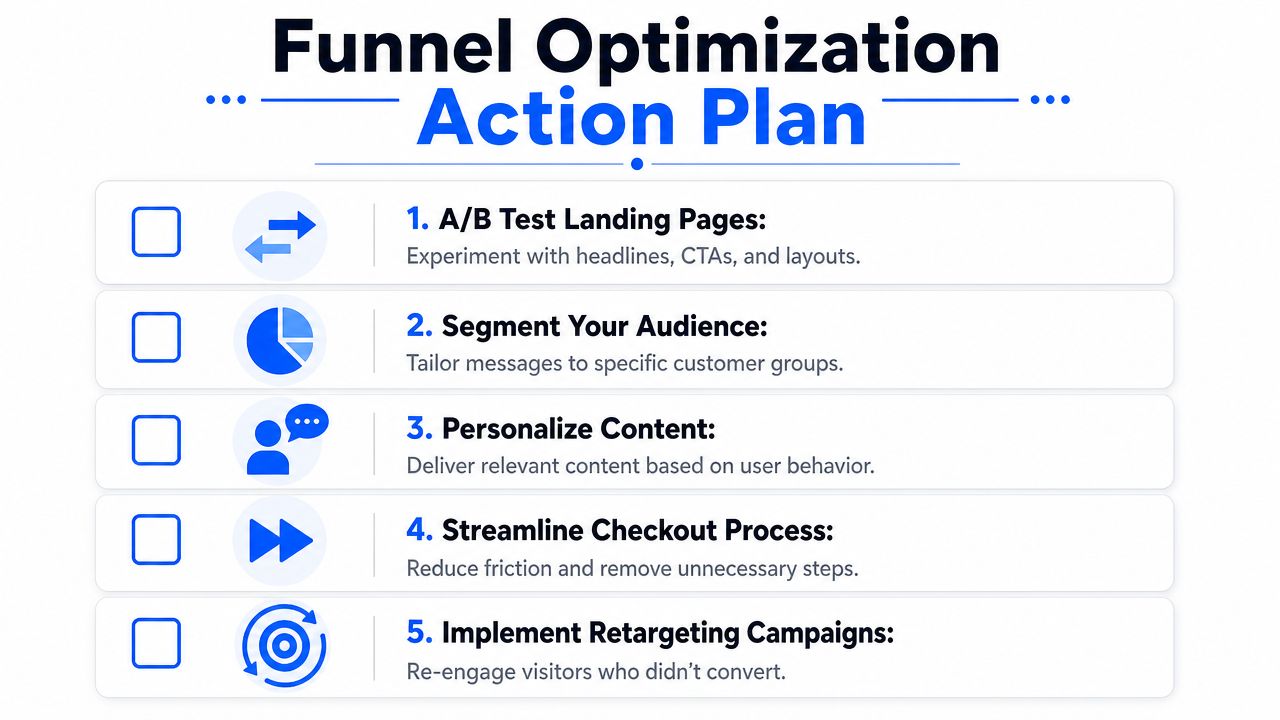
Start with the points that commonly block momentum:
Quiz length
Remove any question that doesn't change recommendation logic or follow-up.Email gate timing
Test capture before results versus after partial progress versus after matched products.Landing page promise
Match the ad angle exactly. If the ad offers guidance, the page should guide.Recommendation page clarity
Give buyers fewer, more confident options instead of a giant result set.Checkout handoff
Reduce the steps between recommendation and cart.
When better intent doesn't mean faster purchases
Some products need a slower close. Higher-consideration categories often benefit from qualification and trust before urgency. If your interactive funnel is attracting more serious shoppers but purchase speed stays flat, don't rush to add bigger discounts.
Instead, decide which outcome matters most right now:
Faster conversion
Good when products are simple, lower risk, or replenishment-driven.Better-qualified conversion
Better when returns, poor fit, or low repeat rates are hurting profitability.Higher customer value over time
Usually the right target when your first order is only the start of the relationship.
If you're looking for additional testing ideas around conversion paths, this resource from UFO Performance Marketing on conversions is a solid companion for prioritizing experiments beyond surface-level page tweaks.
The strongest playbook is usually boring in the best way. Tighten the offer. shorten the form. improve the recommendation. sharpen the follow-up. Then repeat.
If your Shopify funnel needs a stronger qualification layer, VeeForm is one option for building quizzes, lead forms, surveys, and product recommendation flows that can be embedded on-page, launched in popups, and connected to your marketing stack without custom development.
